Rooted Stories shares the people, places, and passions behind our regional food community. This conversation features Megan Craggs of Carter Hall Farm, whose commitment to preserving heritage livestock breeds helps strengthen local agriculture while honoring generations of farming history.
Tell us about the heritage breeds you raise at Carter Hall Farm.
At Carter Hall Farm, my family raises several heritage breeds of livestock, each with a unique history and connection to early American agriculture. We specifically chose these breeds not only because of their historical significance, but because of the incredible qualities they bring to the farm. Heritage breeds are known for their hardiness, strong natural instincts, ability to thrive on pasture, slower growth rates, and the exceptional quality of food they produce.
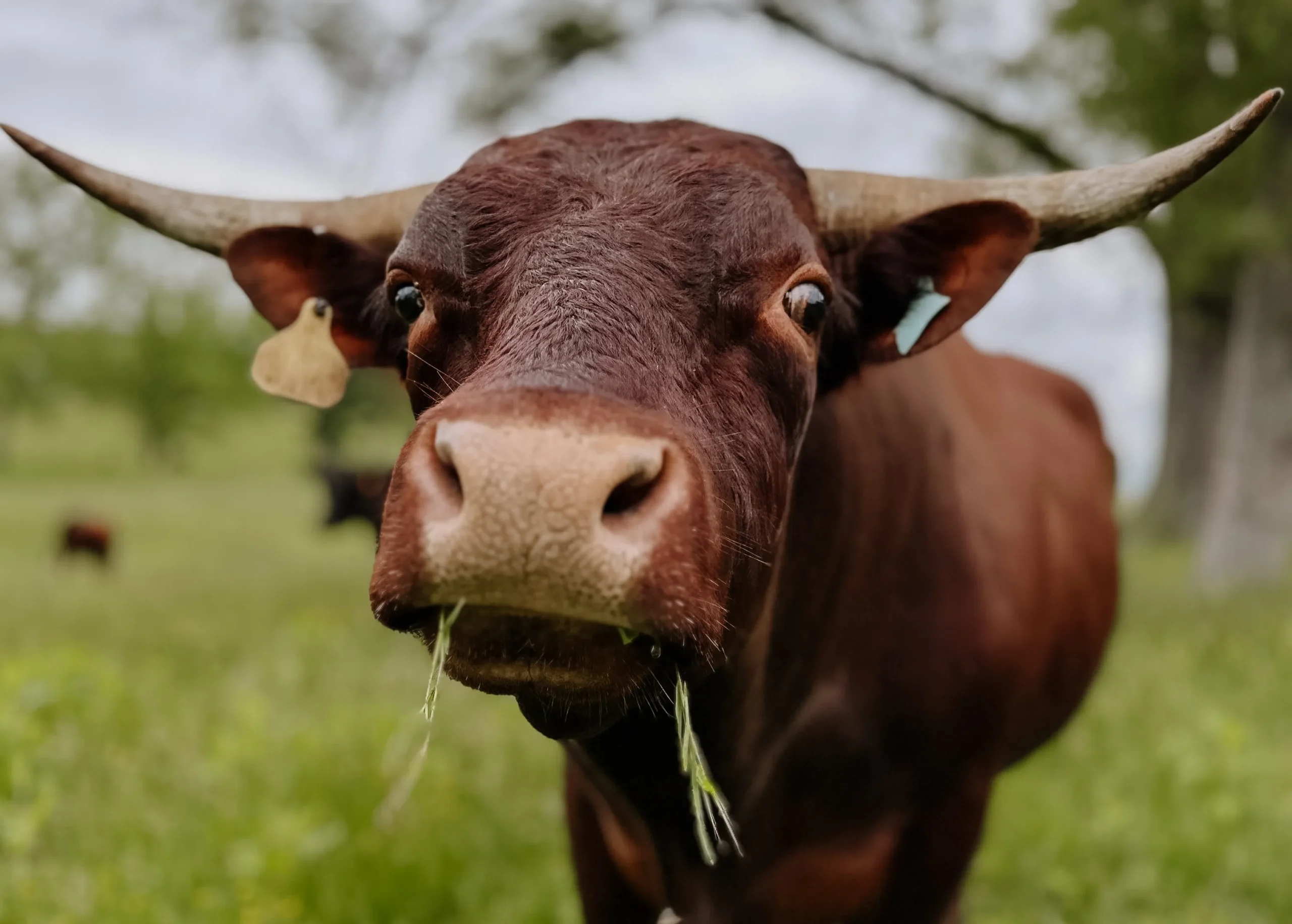
Our cattle are American Milking Devons, which were actually the first cattle brought to the American colonies in 1623. They are considered a tri-purpose breed, meaning they can be used for milk, meat, and as working oxen. They also have a strong historical connection to Virginia, as they were the same breed raised by George Washington at Mount Vernon, where they are still preserved today. American Milking Devons are incredibly efficient grazing animals with calm temperaments and produce beautifully marbled beef with rich flavor.
We also raise Hog Island Sheep, a rare heritage breed descended from sheep brought to Virginia’s Hog Island in the 18th century. In the 1930s and 1940s, severe storms forced the island’s residents to evacuate, leaving some of the sheep behind. Over time, the flock adapted and survived without human intervention, becoming feral and developing incredible hardiness and survival instincts. They are very similar to the type of sheep George Washington would have raised as well, and today organizations like the Mount Vernon Livestock Department work to help preserve both Hog Island Sheep and American Milking Devon cattle.
Finally, we raise Berkshire pigs, a heritage breed that originated in England more than 300 years ago. Berkshire pork is often compared to Wagyu beef because of its exceptional marbling, tenderness, and rich flavor. These pigs are slower growing than commercial breeds, which allows them to develop the superior meat quality they are known for. They are also excellent foragers and do very well in pasture-based systems, which aligns closely with how we believe livestock should be raised.
What’s happening on the farm as spring transitions into summer?
Right now, the farm is full of life as we transition from spring into summer. We have lambs, goat kids, piglets, and calves all running around, so it’s a really exciting and busy time of year for us. Everywhere you look there’s new life and activity, which always makes this season feel especially rewarding.
One of the biggest projects we’re currently working on is building out a second pig production paddock. On our farm, we have separate paddocks for our production pigs and for the pigs we raise for meat, and we’re continuing to expand and improve that part of our operation. We’re also working to incorporate additional heritage pig breeds into our program so we can create unique crossbreeds that offer a wider variety of flavor profiles and textures in our pork. That’s something we’re really passionate about, because we believe the breed, environment, and slower growth all play a huge role in the quality of the final product.
Our pigs are raised both on pasture and throughout the 20 acres of woods on our farm, where they’re able to root, forage, and express their natural instincts. Watching the animals thrive in that environment is one of the most rewarding parts of what we do, and this season is when you really start to see the farm at its fullest.
Where can people find your products?
You can find our products throughout the season at two local farmers markets here in the Shenandoah Valley. We set up every Saturday from 9am–1pm at the Stephens City Farmers Market, located at 5165 Main Street in Stephens City, Virginia, and every other Sunday from 11am–3pm at the Middletown Farmers Market, located at 7881 Main Street in Middletown, Virginia.
We also love participating in other community events and special festivals throughout the year whenever we have the opportunity. Connecting directly with people in our local community and sharing the story behind our farm and heritage livestock is one of our favorite parts of what we do.
What are you looking forward to as part of the Root to Table community?
As a member of the Root to Table community, I’m really looking forward to connecting with more people who are part of our local food economy and who share a passion for agriculture, craftsmanship, and sustainable food systems.
One of my favorite parts of farming is the relationships and stories behind it all, so I’m excited to meet other farmers, producers, chefs, and small businesses, hear about their journeys, and share the story of what we’re building at Carter Hall Farm as well. I think there’s something really special about bringing together people who care deeply about where food comes from and the hands that produce it, and I’m grateful to be part of a community that values those connections.
Anything else you’d like people to know about the farm?
Preserving historic heritage breeds is incredibly important to us, not only because of their connection to agricultural history, but because of the valuable traits they bring to the future of farming. We truly believe these breeds have an important place in creating a more sustainable and resilient food system.
We also love connecting with people who are interested in starting their own journey with heritage breed livestock and becoming part of the effort to help preserve these animals for future generations. In addition to raising livestock for food production, we are also involved in livestock sales, which allows us to help place these animals with other farms and families who are passionate about continuing these important bloodlines.